
Hiking is one of the best ways to explore nature, whether you’re walking through forest trails, climbing mountain paths, or trekking across rocky landscapes. However, while most hikers spend considerable time choosing backpacks, trekking poles, and outdoor clothing, they often overlook something equally important: their feet.
Your feet carry your entire body weight, absorb the impact of uneven terrain, and endure hours of continuous movement. Without proper attention, even a short hike can result in painful blisters, sore heels, swollen toes, or other uncomfortable foot problems.
Proper foot care while hiking can make the difference between enjoying a memorable adventure and struggling to complete the trail.
Whether you’re planning your first trek or preparing for a multi-day hiking expedition, these 12 practical tips will help keep your feet healthy, comfortable, and ready for the journey.
Why Is Foot Care While Hiking Important?
Your feet experience significant pressure during hiking, especially when navigating steep climbs, rocky surfaces, and downhill sections.
Unlike everyday walking, hiking involves repetitive movements over unpredictable terrain. Combined with sweat, friction, and poorly fitted footwear, these conditions increase the chances of developing foot problems.
Some common hiking-related foot issues include:
- Blisters caused by repeated friction
- Swollen feet after prolonged walking
- Black toenails from pressure inside shoes
- Heel pain and sore arches
- Fungal infections caused by prolonged moisture
- Hot spots that develop into painful blisters
Fortunately, many of these problems can be prevented with proper preparation and consistent foot care habits.
12 Essential Tips for Foot Care While Hiking
Choose Hiking Shoes That Fit Properly
Your footwear is the foundation of good foot care while hiking.
Shoes that are too tight can cause pressure on your toes, while oversized shoes allow excessive movement that increases friction.
When purchasing hiking footwear, make sure there’s enough room for your toes to move comfortably. Your heel should remain secure without excessive slipping.
Try hiking shoes while wearing the socks you intend to use on the trail. Since feet may swell during extended walks, testing the fit later in the day can also help.
Most importantly, avoid wearing brand-new hiking shoes on a long trek. Break them in with shorter walks first.
Wear Moisture-Wicking Hiking Socks
Cotton socks may feel comfortable during everyday activities, but they’re generally not ideal for hiking.
Cotton absorbs moisture and takes longer to dry, which can increase friction and discomfort.
Instead, choose hiking socks made from merino wool or synthetic moisture-wicking materials.
These fabrics help manage sweat and provide cushioning in areas that experience repeated pressure.
For longer hikes, carrying an additional pair of socks is a simple way to improve comfort.
Keep Your Feet as Dry as Possible
Moisture is one of the biggest challenges hikers face, particularly in humid forests, rainy conditions, and tropical destinations.
Wet feet are more vulnerable to skin irritation, blisters, and certain infections.
During breaks, remove your shoes and allow your feet to air out whenever conditions permit.
If your socks become soaked, replace them with a dry pair.
For hikers exploring destinations such as Kerala or the Western Ghats during the monsoon, managing moisture becomes especially important.
Water-resistant footwear can help in some conditions, but remember that waterproof shoes can also trap moisture once water gets inside.
Trim Your Toenails Before the Hike
Long toenails may seem like a minor concern, but they can become painful during downhill hiking.
As your feet move forward inside your shoes, your toes repeatedly press against the front of the footwear.
This pressure can cause bruising, discomfort, or black toenails.
Trim your nails straight across before hiking and gently smooth sharp edges.
Avoid cutting them excessively short, as this may irritate the surrounding skin.
Prevent Blisters Before They Develop
Blisters are among the most common problems hikers experience.
They usually develop when repeated friction damages the skin, particularly around the heels, toes, and sides of the feet.
If you notice a warm, irritated area, often called a hot spot, address it immediately.
You can apply suitable blister-prevention tape or a protective dressing to reduce friction.
Making small adjustments to your socks or shoe fit can also prevent the discomfort from getting worse.
The best approach to blister prevention is to act before the skin becomes visibly damaged.
Friction is one of the biggest reasons hikers develop painful blisters. Applying a small amount of petroleum jelly, such as Vaseline Original, to areas prone to rubbing may help reduce friction between your skin and hiking socks.
Focus on common problem areas like the heels and sides of your toes, and test the product during shorter hikes before relying on it for a long trek.
Recommended product: Check Vaseline Original Petroleum Jelly on Amazon
Take Regular Breaks to Rest Your Feet
Long-distance hiking places continuous pressure on your feet, ankles, and lower legs.
Taking occasional breaks allows you to check for developing discomfort and adjust your footwear.
During a rest stop, loosen your shoelaces if necessary and inspect areas that feel irritated.
If conditions are safe and dry, removing your shoes briefly can help your feet cool down.
Avoid pushing through persistent pain simply to maintain your hiking pace.
Use Proper Lacing Techniques
Many hikers overlook how much difference shoelacing can make.
Improperly tied shoes may allow your feet to slide forward during descents, placing pressure on the toes.
Alternatively, excessively tight laces can restrict comfort and create painful pressure points.
Adjust your lacing according to the terrain.
For downhill sections, securing the heel can help limit forward movement. On flatter trails, ensure the shoes remain supportive without feeling restrictive.
Experiment with different lacing methods during practice hikes rather than trying unfamiliar techniques on a demanding trek.
Carry a Small Foot Care Kit
A basic foot care kit takes up very little space but can be extremely useful during unexpected discomfort.
Consider including:
- Blister-prevention tape
- Hydrocolloid blister dressings
- Antiseptic wipes
- Spare moisture-wicking socks
- Small nail clippers for longer trips
- A compact first-aid kit
For multi-day treks, a small towel can also help with drying your feet.
Keeping these essentials accessible allows you to respond quickly rather than waiting until the end of the hike.
Strengthen Your Feet Before Long Treks
Healthy feet aren’t just about good shoes and socks. Strength and conditioning also matter.
If you’re preparing for a challenging hike, gradually increase your walking distance over several weeks.
Simple exercises such as calf raises, toe movements, and single-leg balance exercises can help improve lower-leg strength and stability.
Practice walking on varied terrain while wearing your hiking footwear.
This preparation allows your feet and muscles to adapt progressively instead of suddenly facing several hours of unfamiliar activity.
If you’re planning to explore hiking trails in Kerala, destinations like Dhoni Waterfalls in Palakkad offer an opportunity to experience forest trekking and scenic surroundings. Before heading out, make sure your hiking shoes are comfortable, your feet are properly conditioned, and you’re prepared for uneven terrain.
Pay Attention to Foot Pain
Some tiredness after hiking is normal, but sharp or persistent foot pain shouldn’t be ignored.
Pain around the heel, arch, or ball of the foot may indicate excessive pressure, overuse, or an underlying problem.
If discomfort begins during the hike, stop and examine your footwear and feet.
Adjust your socks or laces if friction is responsible.
However, if you experience severe pain, significant swelling, numbness, or difficulty bearing weight, avoid continuing the trek and seek medical assessment.
Ignoring warning signs can turn a manageable issue into a more serious injury.
Clean and Dry Your Feet After Hiking
Foot care while hiking doesn’t end when you reach your destination.
After completing the trail, remove your shoes and socks and inspect your feet for irritation, blisters, or minor injuries.
Wash your feet with clean water and mild soap, especially after hiking through muddy or dusty areas.
Dry them thoroughly, including between your toes.
Change into clean, dry socks or comfortable footwear.
If you have blisters, protect them with an appropriate dressing and avoid unnecessarily breaking the skin.
Give Your Feet Time to Recover
After a demanding hike, your feet may need time to recover from hours of repetitive movement.
Resting, reducing unnecessary walking, and elevating tired feet can help relieve temporary discomfort.
Gentle ankle movements or light stretching may also feel beneficial.
Avoid immediately returning to strenuous activity if your feet remain painful.
For multi-day hiking trips, assess your foot condition each morning before continuing.
Allowing adequate recovery is just as important as preparing properly before setting off.
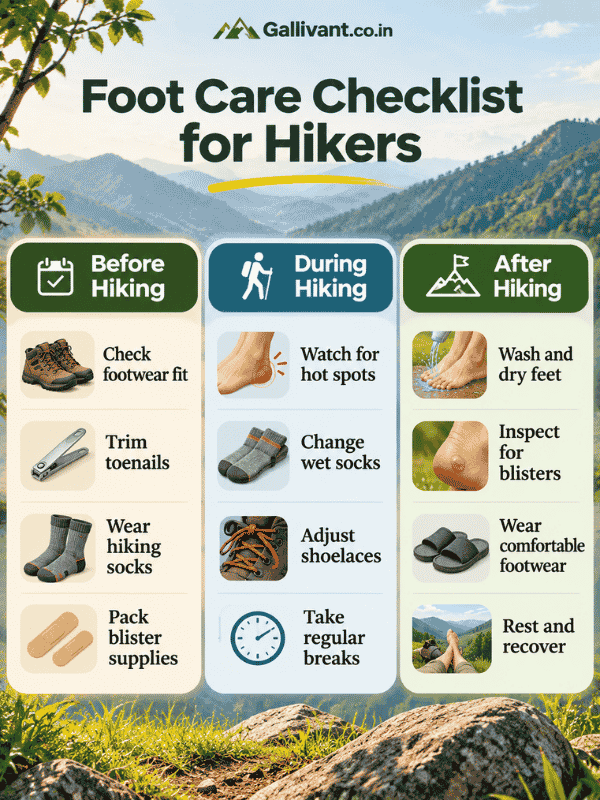
Quick Foot Care Checklist for Hikers
Frequently Asked Questions
How do I prevent my feet from hurting while hiking?
Wear properly fitted hiking shoes, choose moisture-wicking socks, gradually build walking endurance, and take breaks when needed. Persistent pain should not be ignored.
Should I apply petroleum jelly before hiking?
A small amount may help reduce friction in areas prone to rubbing. However, results vary, and excessive application can create discomfort. Test any anti-friction product during shorter walks first.
Is it better to hike with thick or thin socks?
Neither is automatically better. Choose socks based on your footwear fit, weather conditions, and cushioning needs. Moisture management and comfort matter more than thickness alone.
Make Every Step Count
A successful hike isn’t only about reaching the summit or covering the longest distance. It’s also about staying comfortable enough to enjoy the journey.
From choosing the right footwear to treating hot spots early and allowing proper recovery, these simple habits can prevent many common problems.
Making foot care while hiking part of your regular trekking routine will help you explore trails with greater comfort and confidence, whether it’s a short nature walk or a demanding mountain expedition.

