
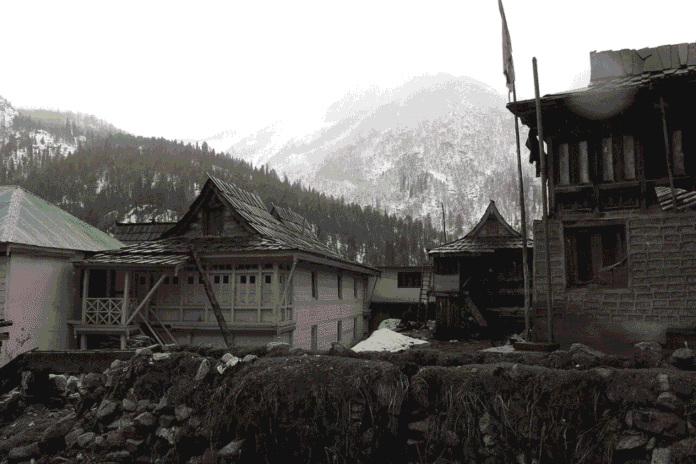
Imagine waking up in a small Himalayan village where the rooftops are covered in fresh snow, mountains disappear into the clouds, and the only sounds come from a flowing river and the occasional footsteps on a quiet road.
That’s what makes Chitkul special.
Located in the Kinnaur district of Himachal Pradesh, Chitkul has received fresh snowfall in November 2026, marking the beginning of another beautiful winter season in the Baspa Valley.
The latest Chitkul snowfall has brought renewed attention to this remote Himalayan destination, which is often called India’s last inhabited village near the Indo-Tibetan border.
For travellers who love mountains, snow-covered landscapes, and peaceful destinations away from crowded tourist hotspots, Chitkul offers an experience quite different from Shimla or Manali.
However, visiting Chitkul during winter requires careful planning. Here’s everything you should know about the recent snowfall, winter weather, accessibility, and the best time to explore this picturesque village.
Chitkul Receives First Snowfall of the Winter Season in November 2026
Winter has officially started making its presence felt in the upper reaches of Himachal Pradesh.
Around November 15, 2026, Chitkul witnessed the season’s first reported snowfall, covering parts of the village and surrounding mountains in white.
The snowfall was also reported by The Tribune, which highlighted the arrival of snow in Kinnaur’s higher-altitude areas.
Situated approximately 3,450 metres above sea level, Chitkul experiences significantly colder temperatures than many popular hill stations.
As winter progresses, snowfall can become heavier, creating beautiful scenery while making travel increasingly difficult.
For photographers and mountain lovers, fresh snowfall offers spectacular views. For residents, however, it signals the arrival of challenging winter conditions.
Where Is Chitkul Village Located?
Chitkul is a small Himalayan settlement located in the Sangla Valley of Kinnaur district, Himachal Pradesh.
It is famous for being one of the last inhabited villages accessible to ordinary tourists along the road towards the Indo-Tibetan border.
Surrounded by towering mountains, dense forests, and the Baspa River, Chitkul offers a rare combination of natural beauty and traditional Himalayan culture.
Unlike commercialised hill stations, the village retains much of its traditional character. Wooden houses, narrow pathways, small eateries, and local temples contribute to its distinctive atmosphere.
The Government of India’s tourism platform, Incredible India, also recognises Chitkul as a destination known for its natural surroundings and cultural heritage.
Why Is Chitkul Called India’s Last Village?
Chitkul is popularly known as India’s last village because it is one of the final inhabited settlements in the Baspa Valley before the restricted border region towards Tibet.
The road accessible to regular travellers effectively ends near the village.
However, the description is geographical rather than an official claim that Chitkul is the only last village in India.
Other border settlements, including Mana in Uttarakhand, are also popularly associated with similar titles.
What makes Chitkul particularly appealing is its remote location, traditional architecture, and spectacular Himalayan surroundings.
Chitkul in Winter: What Can Travellers Expect?
Visiting Chitkul in winter is a completely different experience from travelling here during summer.
The green meadows gradually disappear beneath snow, mountain peaks become brighter, and temperatures can fall well below freezing.
Travellers considering a winter visit should prepare for several conditions.
Heavy snowfall: Snowfall can become frequent during the colder months, although the exact timing and intensity vary each year.
Extremely low temperatures: Freezing nights, icy winds, and sub-zero temperatures are possible.
Limited accommodation: Some guesthouses and homestays may close during peak winter because of harsh weather conditions.
Road closures: Snow accumulation can disrupt the road connecting Sangla and Chitkul.
Fewer tourists: Visitor numbers usually decline considerably once winter conditions intensify.
While snowfall makes Chitkul visually stunning, reaching the village is not always possible during December, January, and February.
Best Time to Visit Chitkul for Snowfall
The best time to visit Chitkul depends on whether you want comfortable sightseeing conditions or snowy landscapes.
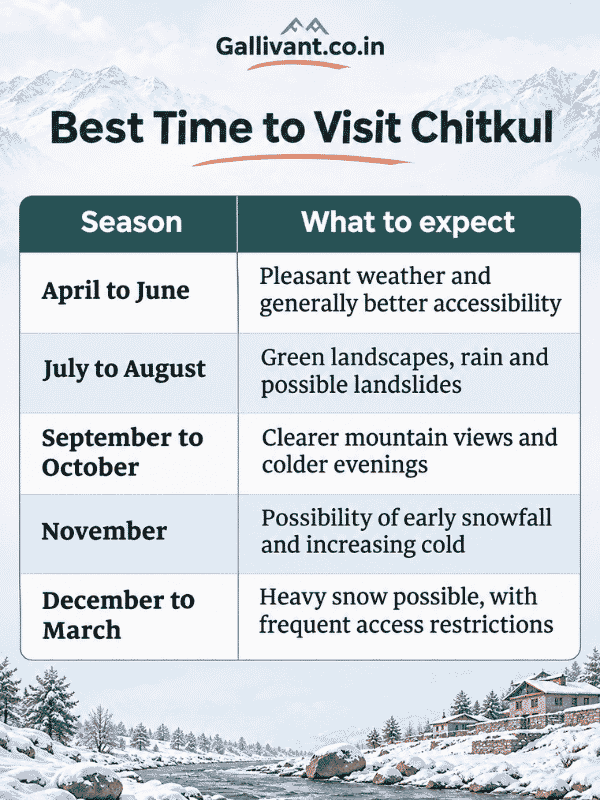
For most travellers, May to June and September to October are better periods for visiting Chitkul.
Those hoping to witness snowfall may consider late autumn or early winter, but snow is never guaranteed on specific dates.
Himachal Tourism identifies April to November as a generally favourable period for visiting the wider Sangla and Kalpa region.
How to Reach Chitkul Village in Himachal Pradesh
Chitkul is primarily accessible by road through Sangla Valley.
The commonly used route is:
Shimla → Narkanda → Rampur → Karcham → Sangla → Rakcham → Chitkul
The distance from Shimla is approximately 240–250 km, depending on the route.
Although the distance may appear manageable, narrow mountain roads and changing weather conditions can make the journey considerably longer than expected.
By road
Travellers can hire a taxi from Shimla or travel towards Sangla using available public transport.
From Sangla, Chitkul is approximately 25–28 km away.
By train
Shimla is connected to Kalka through the famous Kalka-Shimla railway. Travellers can reach Kalka through the wider Indian Railways network and continue towards Kinnaur by road.
By air
Shimla Airport is one option, subject to flight availability and operational conditions. Chandigarh is another practical arrival point for travellers planning a longer road journey.
Important: Before travelling during winter, confirm road conditions, accommodation availability, and local weather forecasts.
Best Places to Stay in Chitkul
Finding the right accommodation in Chitkul can make your Himalayan getaway even more memorable. The village offers cosy homestays, wooden cottages, guesthouses, and mountain-view stays where travellers can experience the peaceful surroundings of the Baspa Valley.
If you’re visiting during winter, consider staying in Sangla or Rakcham as alternatives, especially when heavy snowfall affects accommodation availability and road accessibility in Chitkul.
Whether you’re looking for a budget-friendly homestay or a comfortable mountain retreat, it’s best to compare accommodation options and check availability before travelling.
Planning your stay? Explore the best hotels and homestays in Chitkul on Tripadvisor to compare traveller reviews, accommodation options, and available prices.
Places to Visit Near Chitkul
Although Chitkul itself is the main attraction, several places nearby deserve attention.
Sangla Valley
Sangla is known for its beautiful mountain scenery, traditional villages, and the Baspa River. It also offers more accommodation options than Chitkul.
Rakcham Village
Situated between Sangla and Chitkul, Rakcham is an excellent place for travellers who enjoy peaceful Himalayan landscapes and photography.
Baspa River
The Baspa River flows through the valley, creating one of the region’s most recognisable landscapes.
Visitors should admire the river from safe locations, especially during freezing weather.
Mathi Temple
Chitkul’s Mathi Temple is an important local religious landmark, celebrated for its traditional wooden architecture and cultural significance.
Kalpa
Located in another part of Kinnaur, Kalpa offers spectacular views of the Kinner Kailash mountain range and can be included in a longer itinerary.
Is It Safe to Visit Chitkul During Snowfall?
Travelling to Chitkul during active snowfall requires caution.
The road beyond Sangla can become slippery or completely blocked by snow. Sudden weather changes may also affect visibility and mobile connectivity.
Travellers should avoid driving on snow-covered mountain roads without suitable experience and equipment.
Carrying sufficient winter clothing, essential medication, drinking water, and backup supplies is advisable.
Because Chitkul is located at a high altitude, visitors should also allow time to acclimatise and remain alert to symptoms of altitude sickness.
If heavy snowfall is forecast, postponing the journey is generally safer than attempting to reach the village.
Frequently Asked Questions About Chitkul Snowfall
Does Chitkul receive snowfall in November?
Yes. Chitkul can receive snowfall during November. Fresh snowfall was reported in the village in November 2026, although conditions vary from year to year.
Can tourists visit Chitkul in December?
Visits depend on weather and road accessibility. Heavy snow may close the Sangla-Chitkul road, so travellers should confirm local conditions before departure.
Which month is best for Chitkul snowfall?
December through February generally offers stronger chances of winter snow, but road closures can prevent tourist access.
How far is Chitkul from Sangla?
Chitkul is approximately 25–28 km from Sangla, with travel time depending on road and weather conditions.
Is Chitkul better than Manali for snowfall?
Chitkul offers a quieter, more remote Himalayan experience, while Manali generally has better tourism infrastructure and more accessible accommodation options.
A Himalayan Village Worth Discovering Beyond Winter
The November 2026 Chitkul snowfall is another reminder of how dramatically Himalayan landscapes change with the seasons.
For some, the appeal lies in photographing snow-covered rooftops and towering mountains. For others, it is the opportunity to experience a traditional village far away from busy tourist centres.
But Chitkul deserves attention beyond snowfall alone.
Its culture, architecture, peaceful surroundings, and location in the beautiful Baspa Valley make it a rewarding destination during the warmer months too.
If you’re planning a journey to India’s last village, choose your travel dates carefully and remember that the most beautiful winter scenery can sometimes be the hardest to reach.

