
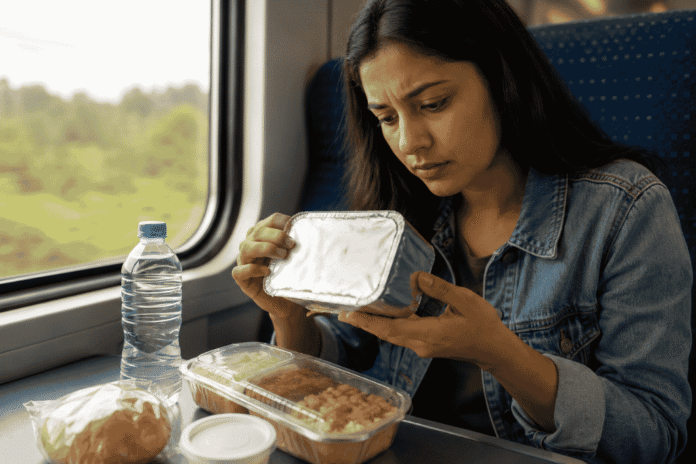
Train journeys often come with their own food traditions. A cup of tea near the window, a packaged breakfast served at the seat, or snacks purchased from a platform vendor can become part of the travel experience. However, the excitement of eating during a journey should not replace basic food safety checks.
Food served on a train may travel through several stages before reaching a passenger. It can be prepared in a kitchen, packed by a catering company, transported to the station, loaded onto the train, stored inside catering compartments, and distributed across multiple coaches. A failure at any point can affect its freshness and safety.
A recent incident highlighted why passengers should inspect food before eating it. According to a Times of India report, 74 passengers travelling on the New Delhi–Rani Kamalapati Shatabdi Express were reportedly served packaged bread past its printed use-by date. A passenger noticed the date and alerted others, but several people had reportedly already consumed the bread. IRCTC later penalised the service provider and removed the responsible staff members from duty.
The incident is a useful reminder that a few seconds of inspection can help passengers avoid unnecessary health risks and unpleasant experiences during a journey.
Check the Expiry or Use-By Date
The first thing to examine on any packaged food item is the date printed on the label. Look for terms such as “expiry date,” “use by,” “best before,” or “consume before.”
A use-by or expiry date generally indicates the period within which the food is expected to remain safe when stored correctly. Food should not be consumed once this date has passed, particularly if it contains dairy products, bread, meat, eggs, cream, or other ingredients that spoil easily.
A best-before date usually relates more closely to quality than immediate safety. The taste, texture, aroma, or freshness may begin to decline after that date. Even so, eating a product after its best-before date during a train journey is an unnecessary risk, especially when there is no reliable way to confirm how it was transported or stored.
Do not assume that catering staff have already checked every packet. Read the date yourself before opening it.
Inspect the Packaging Carefully
A food packet may be within its printed date and still be unsafe if the packaging is damaged.
Check whether the seal is intact. Avoid products with torn wrappers, loose lids, punctures, leaks, or signs that the packet has already been opened. Packaged snacks should not feel unusually soft if they are normally crisp. Bottled drinks should have an unbroken cap seal.
Swollen packets are another warning sign. A bloated milk carton, juice box, ready-to-eat meal pouch, or sealed food tray may indicate gas formation inside the packaging. Do not taste the product to investigate. Return it immediately and request a replacement.
Also inspect the packet for moisture, oil leakage, stains, or food residue around the seal. These can indicate mishandling or improper storage.
Notice the Smell Before Eating
Your sense of smell can provide an early warning that something is wrong.
After opening the packet, pause before taking a bite. Fresh food should smell consistent with what it is supposed to contain. Bread should not smell sour or musty. Milk should not have an acidic odour. Rice and cooked vegetables should not smell fermented. Eggs, meat, paneer, and gravies should not produce an unusually strong or unpleasant smell.
Do not rely on added spices, sauces, or seasoning to judge freshness. Strong flavours can sometimes make spoiled ingredients more difficult to identify.
When something smells wrong, do not eat it simply because you have already paid for it. The cost of replacing a meal is far lower than the discomfort of becoming sick during a long journey.
Look for Changes in Colour and Texture
Food does not always need to smell bad to be unsafe or spoiled. Visual and textural changes may appear first.
Check bread for green, black, blue, or white fuzzy spots. Even when mould appears on only one corner, it is safer to discard the entire portion rather than removing the affected area.
Rice should not appear excessively dry, slimy, or clumped in an unusual way. Gravies should not show unexpected separation, bubbling, or discolouration. Cut fruits should look fresh rather than brown, watery, or mushy. Dairy-based foods should not appear curdled unless that texture is part of the dish.
Pay attention to sandwiches as well. Wilted vegetables, watery fillings, soggy bread, or a sour taste can suggest that the sandwich has been stored for too long or kept at an unsuitable temperature.
Check Whether Hot Food Is Actually Hot
Cooked food intended to be served hot should arrive reasonably hot, not lukewarm or cold.
Temperature matters because prepared food can become unsafe when it remains within an unsuitable temperature range for too long. During train journeys, meals may be packed well before they are served. Delays in loading, distribution, or service can increase the time between cooking and consumption.
Be particularly cautious with rice, dal, paneer, chicken, egg dishes, curries, and food containing cream or milk. If a meal that should be hot arrives completely cold, ask when it was prepared and request a freshly heated or properly stored alternative.
Reheating does not automatically make spoiled food safe. It may reduce some risks, but it cannot reverse every problem caused by poor handling or extended storage.
Be Careful with Dairy and Egg Products
Dairy and egg-based foods require extra attention because they can spoil quickly when storage conditions are poor.
Inspect milk packets, curd containers, mayonnaise-based sandwiches, paneer dishes, cream-filled products, boiled eggs, omelettes, and desserts carefully. Confirm that sealed items are within their dates and that chilled products are still cold when served.
Avoid consuming milk that is lumpy, sour-smelling, or stored in a swollen packet. Boiled eggs should not have an unusually strong odour or discoloured appearance. Sandwiches containing mayonnaise should not feel warm after being stored for an extended period.
Children, older adults, pregnant women, and people with existing health conditions may be more vulnerable to the effects of contaminated food, making these checks especially important when travelling with family.
Verify Packaged Drinking Water
Water deserves the same attention as food.
Check that the bottle cap is properly sealed and has not been tampered with. Look at the printed manufacturing and expiry information, the brand name, and the overall condition of the bottle.
Avoid bottles with broken rings around the cap, damaged labels, unusual particles, cloudiness, or water filled at an inconsistent level. Do not accept a bottle that appears to have been opened and resealed.
When buying water at a railway station or on a train, purchase it from an authorised vendor whenever possible. Keep the bottle with you after opening it rather than leaving it unattended.
Confirm the Vendor Is Authorised
Not every person selling food inside a train or on a platform is necessarily an authorised vendor.
Uniforms, identification cards, printed receipts, branded packaging, and official catering equipment can help passengers identify legitimate sellers. When ordering through an authorised railway service or recognised food delivery platform, verify the order details before accepting the meal.
Unauthorised sellers may offer cheaper food, but passengers may have little information about where it was prepared, how long it has been carried, or whether proper hygiene standards were followed.
A low price should not be the only deciding factor when choosing food during a journey.
Observe How the Food Is Handled
Food safety is affected not only by the product but also by the person serving it.
Notice whether the vendor handles food directly with bare hands, touches money and food without cleaning their hands, leaves containers uncovered, or places packets on dirty surfaces. Also check whether utensils, trays, and serving containers appear clean.
Open food exposed to dust, insects, passengers, and platform pollution carries greater risk than properly covered or sealed food. Freshly cooked platform food may look appealing, but avoid it when it has been sitting uncovered for an unknown period.
Choose items prepared in front of you or stored in closed containers.
Avoid Keeping Perishable Food for Too Long
Passengers sometimes save part of a meal for later, especially during overnight journeys. This may be convenient, but perishable food should not remain at room temperature for long periods.
A paneer sandwich purchased in the morning may not remain suitable for an evening snack. The same caution applies to cut fruit, curd, rice, gravies, egg dishes, milk products, and food containing mayonnaise.
Train coaches may become warm, and bags do not provide refrigeration. Unless the food is shelf-stable or stored in a suitable insulated container, it is better to consume it promptly or discard the leftovers.
What to Do If the Food Appears Unsafe
Do not eat food that is expired, damaged, foul-smelling, discoloured, improperly sealed, or suspiciously stored.
Take clear photographs of the food, packaging, printed date, bill, order details, and vendor information. Keep the packet as evidence until the complaint has been recorded. Inform the catering staff, train manager, ticket examiner, or relevant railway support channel.
Ask for a replacement or refund, but do not allow the unsafe item to be taken away before you document it.
When several passengers receive the same product, alert them so they can inspect their packets too. In the Shatabdi incident, one passenger’s decision to check the printed date helped others identify the same issue.
Carry Some Food from Home
Carrying homemade food can reduce dependence on unknown vendors, particularly during the first part of a journey. Dry items such as thepla, idli with dry chutney, roasted snacks, paratha without highly perishable fillings, whole fruits, nuts, and sealed biscuits are often easier to manage while travelling.
Pack food only after it has cooled, use clean airtight containers, and avoid recipes that spoil quickly. Homemade food is not automatically safe for an entire journey. Storage time and temperature still matter.
It is also sensible to carry oral rehydration sachets, basic medicines prescribed or recommended for you, hand sanitiser, tissues, and drinking water.
A Small Check Can Protect the Entire Journey
Train food safety does not require passengers to become food experts. It requires a few simple habits: read the date, inspect the seal, smell the food, observe its appearance, check its temperature, and pay attention to how it has been stored and handled.
Most meals served during train journeys may be consumed without incident. However, the possibility of expired or poorly handled food means passengers should not eat automatically simply because a packet was included with the ticket or handed over by a catering employee.
Checking food before the first bite takes less than a minute. That minute can help protect your health, prevent food poisoning, alert fellow passengers, and ensure that unsafe catering practices are reported rather than overlooked.
Share stories on food, and have it published ot a wider audience!

