
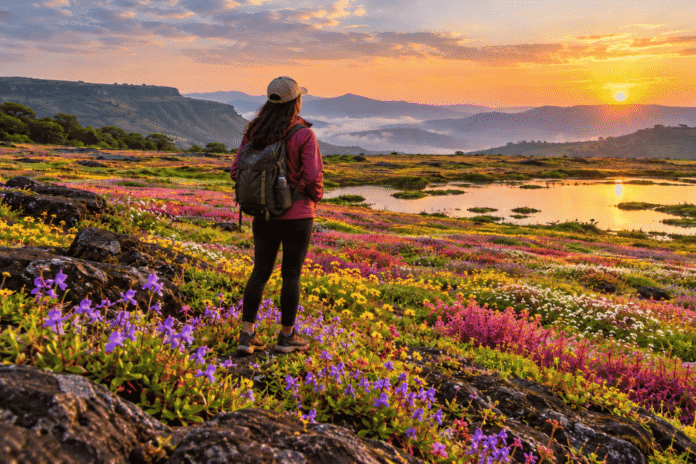
Kaas Plateau is one of Maharashtra’s most remarkable seasonal landscapes. Located near Satara in the Western Ghats, the plateau spends much of the year looking relatively quiet, only to transform dramatically after the monsoon arrives. For a few weeks, stretches of rocky grassland become covered with tiny yellow, pink, purple, white, and blue wildflowers.
Often referred to as the Kaas Plateau Valley of Flowers, this protected landscape attracts nature lovers, photographers, families, botanists, and travelers from across Maharashtra and beyond.
But visiting Kaas Plateau is all about timing.
Unlike a conventional hill station where the scenery remains relatively consistent throughout the year, the experience here can change noticeably within just a few weeks. UNESCO documentation notes that the plateau can even change color every 10 to 20 days as different flowering species appear during the monsoon.
That means someone visiting in July may see a completely different landscape from someone arriving in mid-September.
So, when is the best time to visit Kaas Plateau?
For most travelers hoping to see the famous Kaas Plateau flowers, the ideal period is generally from late August through September and into early October, although the exact flowering cycle depends heavily on rainfall and weather conditions. Maharashtra Tourism also identifies late August to early October as the most favorable period for seeing the wildflowers.
Here is a detailed seasonal guide to help you plan your visit.
Why Is Kaas Plateau Famous?
Kaas Plateau, also called Kaas Pathar, lies around 25 km from Satara and stands at an elevation of roughly 1,200 meters. Maharashtra Tourism describes the plateau as having more than 850 species of flowering plants, including rare and endemic varieties.
Its combination of shallow soil, exposed basalt rock, monsoon rainfall, seasonal pools, grasslands, and unique ecological conditions supports plants that are rarely seen together elsewhere.
During flowering season, the landscape can resemble a naturally created floral carpet.
This is where the name Kaas Plateau Valley of Flowers comes from. Unlike a landscaped botanical garden, however, the flowers here grow naturally. They are small, seasonal, delicate, and closely connected to the plateau’s changing weather.
That natural unpredictability is part of the experience.
One week may be dominated by yellow blooms. Another may bring pink or purple patches, while certain rare species may appear only briefly.
Check: Best places to stay near Kaas Plateau
Understanding the Climate of Kaas Plateau
Kaas Plateau experiences broadly four travel seasons:
- Summer from March to May
- Monsoon from June to August
- Peak flowering and post-monsoon period from late August to October
- Winter from November to February
Each offers a very different landscape.
If your primary goal is seeing flowers, the flowering period should be your priority. But travelers interested in mist, greenery, quiet landscapes, road trips, or photography may find other seasons interesting too.
Summer at Kaas Plateau: March to May
Summer is generally the least popular season for travelers expecting the famous flower-covered landscape.
By March, much of the post-monsoon greenery has faded. As temperatures rise through April and May, the terrain becomes drier, the grasses lose their lush appearance, and wildflower activity remains limited.
The exposed rocky character of the plateau becomes much more visible during this period.
What Kaas Plateau Looks Like in Summer
Instead of flower carpets, expect:
- Dry grasslands
- Exposed laterite and basalt formations
- Open panoramic views
- Clearer skies on many days
- Fewer tourists compared with flowering season
For travelers who enjoy landscapes rather than flowers, the dry terrain can still have visual appeal.
However, anyone searching specifically for Kaas Plateau flowers should avoid planning the trip during summer.
Who Should Visit During Summer?
Summer may suit:
- Travelers looking for fewer crowds
- Landscape photographers
- Road-trip enthusiasts
- Visitors already exploring Satara and nearby areas
For first-time travelers, however, there are much better months to experience Kaas Plateau.
Early Monsoon at Kaas Plateau: June to July
The arrival of the monsoon begins the plateau’s transformation.
Rainfall brings life back to the dry landscape. Grasslands turn green, shallow seasonal pools develop, mist frequently moves across the hills, and the surroundings begin preparing for the flowering season.
June and July can be visually beautiful, but travelers should understand one important distinction:
Green Kaas Plateau is not necessarily flowering Kaas Plateau.
Many visitors arrive during peak monsoon expecting the colorful scenes seen on social media, only to find predominantly green landscapes.
That does not make the experience disappointing. In fact, heavy clouds, rolling mist and rain-covered Western Ghats can make Kaas exceptionally atmospheric.
But widespread flowering usually develops later.
Reasons to Visit in June or July
Early monsoon is good for travelers interested in:
- Lush greenery
- Dramatic clouds
- Mist-covered roads
- Monsoon photography
- Waterfalls around the Satara region
- A quieter experience before peak flowering crowds arrive
Heavy rain, slippery terrain and reduced visibility can occasionally make outdoor exploration less comfortable, so checking local weather conditions before leaving is sensible.
August: The Transformation Begins
August is when attention increasingly turns toward the flowering cycle.
As the monsoon progresses, small seasonal plants begin emerging across the grasslands and rocky patches. Depending on the year’s rainfall, flowering activity can gradually increase during the second half of the month.
The landscape may still appear predominantly green in some areas, while other sections begin developing patches of color.
Late August is therefore one of the most interesting transitional periods.
You may experience:
- Mist and monsoon clouds
- Deep green landscapes
- Early floral carpets
- Cooler temperatures
- Fewer crowds than peak September weekends
Maharashtra Tourism identifies late August as the beginning of the particularly favorable period for visiting Kaas Plateau.
If you prefer seeing the plateau as it moves from monsoon greenery toward flowering season, late August can be an excellent choice.
September: The Best Time to Visit Kaas Plateau
For most travelers, September is the best month to visit Kaas Plateau.
This is the period most strongly associated with the famous floral landscape.
UNESCO documentation describes the plateau as displaying a panorama of wildflower colors during August and September, with different flowering species creating yellow, blue, pink, white and purple phases as the monsoon progresses.
Because different plants flower at different times, the plateau does not necessarily reach one single “peak bloom day.”
Instead, its appearance keeps changing. For travelers planning an overnight stay, exploring hotels near Kaas Plateau in advance can make it easier to visit during the best flowering hours.
What Makes September Special?
September offers a combination of:
- Extensive flowering activity
- Green post-monsoon landscapes
- Pleasant temperatures
- Misty mornings
- Better opportunities for close-up flower photography
- Multiple species blooming during different parts of the month
This is when the Kaas Plateau Valley of Flowers most closely resembles the photographs that make the destination famous.
However, September is also the busiest period.
Weekends and holidays can attract significant visitor numbers, so advance planning becomes especially important.
What Kaas Plateau Flowers Can You See?
The ecological significance of Kaas goes far beyond the appearance of the landscape.
UNESCO documentation records plant groups including Impatiens, Utricularia, Eriocaulon, ground orchids, Smithia, Dipcadi, Senecio and Strobilanthes among the plateau’s seasonal vegetation.
Depending on when you visit, you may notice different colors dominating the landscape.
Yellow flowers may appear across one stretch while another area carries pink or purple tones.
Some flowers are extremely tiny. Instead of expecting large garden-style blossoms, look closely at the grasslands and rocky patches.
Many of the most fascinating Kaas Plateau flowers are easy to miss unless you slow down.
That is why rushing through the plateau merely to take photographs often means missing much of what makes the ecosystem special.
Late September to Early October: Another Excellent Window
Travelers who cannot visit during early or mid-September should not necessarily worry.
Late September and early October can still be excellent.
Rainfall may become less intense, which can make walking and photography more comfortable. Depending on seasonal conditions, various flowering species may remain visible across different parts of the plateau.
This period can offer a good balance between flowers and slightly more comfortable weather.
However, nature does not follow a fixed tourism calendar.
A particularly intense or delayed monsoon can shift flowering patterns. Similarly, dry spells may affect how long particular species remain visible.
Always check the latest local flowering conditions rather than relying solely on dates from previous years.
October: Can You Still See Flowers?
Yes, flowers may still be visible during parts of October, particularly in the early weeks.
But by this stage, the landscape gradually begins transitioning away from peak flowering conditions.
Some species disappear while others may still be blooming.
Traveling during October can work well for people who:
- Prefer less intense rainfall
- Want relatively clearer views
- Are combining Kaas with other Satara attractions
- Cannot travel during September
The earlier you visit in October, the better your chances are generally likely to be for observing the seasonal floral landscape.
Winter at Kaas Plateau: November to February
By November, the primary flowering season has largely ended.
The grasslands gradually turn golden and brown as winter sets in.
Temperatures become cooler and the landscape becomes quieter.
You should not expect the famous Kaas Plateau Valley of Flowers appearance during these months.
However, winter has its own advantages.
Why Visit Kaas Plateau in Winter?
Winter can appeal to:
- Travelers seeking peaceful surroundings
- Road-trip enthusiasts
- Birdwatchers
- Landscape photographers
- Visitors combining Kaas with Satara sightseeing
The absence of the flower-season crowds can make the region feel noticeably calmer.
If flowers are your primary reason for visiting, though, September remains the much stronger choice.
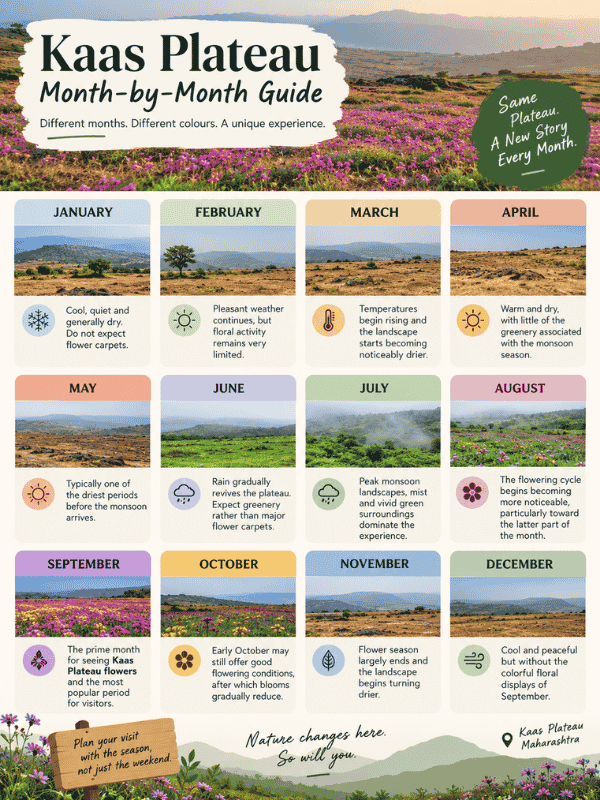
Kaas Plateau Month-by-Month Guide
January
Cool, quiet and generally dry. Do not expect flower carpets.
February
Pleasant weather continues, but floral activity remains very limited.
March
Temperatures begin rising and the landscape starts becoming noticeably drier.
April
Warm and dry, with little of the greenery associated with the monsoon season.
May
Typically one of the driest periods before the monsoon arrives.
June
Rain gradually revives the plateau. Expect greenery rather than major flower carpets.
July
Peak monsoon landscapes, mist and vivid green surroundings dominate the experience.
August
The flowering cycle begins becoming more noticeable, particularly toward the latter part of the month.
September
The prime month for seeing Kaas Plateau flowers and the most popular period for visitors.
October
Early October may still offer good flowering conditions, after which blooms gradually reduce.
November
Flower season largely ends and the landscape begins turning drier.
December
Cool and peaceful but without the colorful floral displays of September.
Best Time for Photography at Kaas Plateau
September is generally the strongest month for flower photography, but the time of day matters too.
Early morning is often particularly attractive because softer light can enhance the colors and textures of the flowers.
Cloudy conditions can also work surprisingly well.
Unlike strong midday sunlight, diffused cloud cover creates softer shadows and makes it easier to photograph tiny flowers without harsh highlights.
For landscape photography, mist moving across the plateau can create some of the most dramatic scenes.
Photography Tips
Consider carrying:
- A camera or smartphone with macro capability
- A microfiber cloth for moisture
- A waterproof camera cover
- Spare battery or power bank
- A small lens rather than excessive equipment
Most importantly, never leave designated visitor areas just to get a better photograph.
The plants are extremely fragile and can easily be damaged by footsteps.
Weekday or Weekend: When Should You Visit?
If possible, choose a weekday during flowering season.
September weekends can become significantly busier because the plateau is within road-trip distance of cities including Pune and Mumbai.
Weekday visits generally offer:
- Fewer visitors
- Easier photography
- A quieter nature experience
- Less pressure around parking and transport
Early time slots can also help you experience the landscape before larger groups arrive.
Kaas Plateau Entry and Advance Booking
Visitor numbers are controlled during the flowering season because Kaas is an ecologically sensitive landscape.
Maharashtra Tourism advises advance booking during peak flowering periods due to limits placed on daily visitors.
Travel rules, entry fees, parking arrangements and permitted visiting hours can change, so check the current official information before traveling.
Avoid relying on outdated screenshots or social-media posts from previous seasons.
What to Wear at Kaas Plateau
Weather can change surprisingly quickly in the Western Ghats.
A morning may begin with sunshine and turn misty or rainy shortly afterward.
Wear:
- Comfortable walking shoes with good grip
- Lightweight quick-drying clothing
- A rain jacket or poncho
- A light layer for cool mornings
- Comfortable trousers suitable for wet conditions
Avoid footwear that becomes slippery easily.
Even outside heavy rain, grass and walking surfaces can remain wet.
What to Carry
Keep your bag lightweight.
Useful items include:
- Drinking water
- Rain protection
- Small towel
- Camera or smartphone
- Power bank
- Basic medicines
- Waterproof pouch for electronics
Avoid carrying unnecessary plastic packaging into the area.
Responsible tourism matters enormously at Kaas because the attraction itself is the fragile ecosystem.
Responsible Travel at Kaas Plateau
Kaas Plateau is not simply a sightseeing attraction.
It is a sensitive biodiversity hotspot.
Visitors should:
- Stay on marked paths
- Never pluck flowers
- Avoid stepping into flowering patches
- Never leave food wrappers or plastic behind
- Avoid disturbing insects and other wildlife
- Follow instructions provided by local authorities
- Avoid loud music
A single footprint may damage plants that take an entire seasonal cycle to emerge.
The best way to experience Kaas is therefore to observe rather than interfere.
How to Reach Kaas Plateau
Kaas Plateau is located close to Satara in Maharashtra.
From Satara
The plateau lies roughly 25 km from Satara city.
The road gradually climbs toward the Western Ghats and becomes especially scenic during monsoon and post-monsoon months.
From Pune
Kaas is popular as a weekend road trip from Pune. Travelers generally drive toward Satara before continuing toward the plateau.
An early departure is advisable during flowering season.
From Mumbai
Travelers from Mumbai often either drive directly or reach Satara first and continue onward toward Kaas.
For a more relaxed trip, staying overnight around Satara can be preferable to attempting a rushed same-day journey.
Places to Visit Near Kaas Plateau
A trip does not have to end after seeing the flowers.
The Satara region includes several attractive natural destinations that can turn the visit into a complete weekend itinerary.
Kaas Lake
Located close to the plateau, Kaas Lake offers a peaceful contrast to the busier flower-viewing areas. Forest-covered slopes and misty surroundings make the area particularly scenic during the monsoon.
Thoseghar Waterfalls
Thoseghar is one of the best-known monsoon attractions near Satara. Maharashtra Tourism notes that the waterfall area lies around 20 km from Satara and becomes particularly impressive during the rainy season.
Satara
Staying in Satara gives travelers convenient access to Kaas while also making food, accommodation and transport easier to arrange.
If you have more time, the surrounding Western Ghats offer several viewpoints, waterfalls and scenic drives.
How Long Should You Spend at Kaas Plateau?
For most travelers, a few hours are sufficient for exploring the main visitor areas at an unhurried pace.
However, the journey becomes much more enjoyable when you avoid treating it like a checklist destination.
Spend time observing individual plants, watching clouds move across the plateau and noticing how the landscape changes between rocky areas, grasslands and seasonal water patches.
A one-night stay near Satara also makes it easier to visit during a favorable morning slot without spending most of the day driving.
Is Kaas Plateau Worth Visiting Outside Flower Season?
It depends entirely on your expectations.
If you want the colorful flower-covered landscape shown in travel photographs, visiting outside late August, September or early October may be disappointing.
But Kaas is still scenic during the monsoon.
June and July bring lush greenery, rolling clouds and dramatic Western Ghats scenery.
Winter provides quiet landscapes and comfortable road-trip weather.
Summer exposes the plateau’s rocky geology.
Each season reveals a different version of Kaas.
The key is knowing what you want to experience before planning your dates.
So, What Is the Best Time to Visit Kaas Plateau?
For travelers visiting primarily to see flowers, late August to early October is generally the best period, with September usually offering the strongest overall experience.
Maharashtra Tourism similarly identifies late August through early October as the favorable flowering period.
Choose September if your priority is:
- Seeing the largest variety of seasonal blooms
- Photographing flower-covered landscapes
- Experiencing the famous Kaas Plateau Valley of Flowers
- Visiting when the plateau is at its most colorful
Choose July or early August if you prefer:
- Heavy monsoon scenery
- Mist
- Deep green landscapes
- Fewer flower-season crowds
Choose winter if you prefer:
- Peaceful road trips
- Cooler weather
- Lower visitor numbers
The flowering season remains the highlight, but rainfall ultimately decides when the landscape reaches its best.
A Landscape That Changes Every Few Weeks
Perhaps the most fascinating thing about Kaas Plateau is that there is no single version of it.
The landscape continuously evolves with rainfall, sunlight and successive flowering cycles. UNESCO’s documentation notes that the colors of the plateau can change roughly every 10 to 20 days during the monsoon as different species dominate the landscape.
That is what makes returning worthwhile.
One visit may reveal carpets of yellow flowers. Another may be dominated by pink, white, blue or purple.
The Kaas Plateau flowers are not simply an attraction planted for tourists. They are part of a highly specialized ecosystem that appears briefly each year before disappearing again.
For travelers willing to arrive at the right time, walk slowly and respect the environment, the Kaas Plateau Valley of Flowers offers one of Maharashtra’s most memorable monsoon and post-monsoon experiences.
If you have a travel story, destination guide, or firsthand experience to share, you can also write for us and contribute to Gallivant.

