
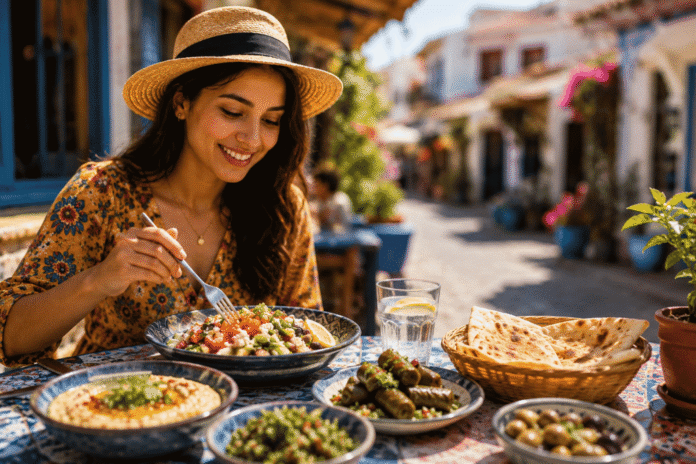
Trying local food is often one of the best parts of travelling. Street-food stalls, hotel breakfasts, regional desserts, family-run restaurants, and unfamiliar ingredients can make a trip far more memorable. However, changes in eating habits, sleep, hydration, and physical activity can also leave you feeling uncomfortable.
Vacation bloating is common among travellers, especially during long flights, road trips, food-focused holidays, and trips where daily routines change suddenly. You may notice a tight or swollen stomach, excess gas, heaviness after meals, or a general feeling that your digestion is not working as smoothly as usual.
The good news is that you do not have to avoid local cuisine or survive on plain food throughout your trip. Learning how to avoid vacation bloating is more about making small, practical choices than following a restrictive diet.
Why Vacation Bloating Happens
Travel affects the body in several ways. You may eat at different times, consume larger meals, drink less water, walk less during travel days, and try foods your digestive system is not used to. Digestive gas and bloating can also result from swallowed air and certain foods and drinks, according to the National Institute of Diabetes and Digestive and Kidney Diseases.
Air travel can add to the problem. Sitting for several hours reduces movement, while low humidity inside an aircraft can contribute to dehydration. Some people also swallow more air when chewing gum, drinking through straws, eating quickly, or consuming fizzy drinks.
Once you reach your destination, restaurant meals may contain more salt, oil, sugar, and rich sauces than the food you normally eat at home. Alcohol, disrupted sleep, jet lag, and constipation can make the discomfort worse.
Vacation bloating does not necessarily mean that a particular local dish is unhealthy. It may simply mean your body is adjusting to several changes at once.
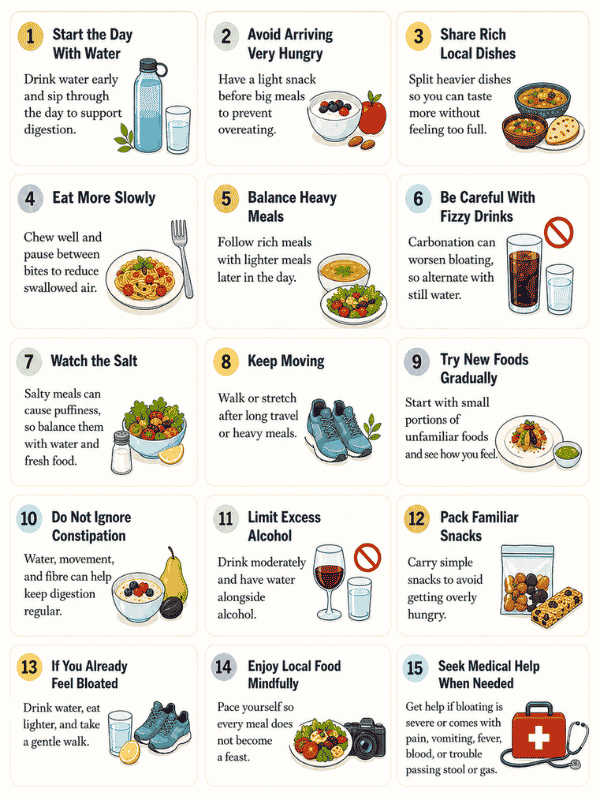
Start the Day With Water
It is easy to forget to drink enough water while sightseeing. You may avoid drinking because public toilets are difficult to find, or you may replace water with coffee, soft drinks, cocktails, or packaged juices.
Regular hydration supports normal digestion and can help reduce constipation, which is a common contributor to bloating during travel.
Drink water after waking up and carry a reusable bottle whenever practical. Take small sips throughout the day instead of drinking a large amount all at once after you already feel thirsty.
When travelling in hot or humid destinations, you may need more fluids because you lose water through sweat. Choose safely prepared drinking water and follow local guidance about whether tap water is suitable for visitors.
Avoid Arriving at Meals Extremely Hungry
Skipping breakfast or lunch to “save space” for a special dinner can easily lead to overeating. When you arrive at a restaurant extremely hungry, you are more likely to eat quickly, order too much, and continue eating after you feel full.
Large meals place more pressure on the digestive system and can worsen vacation bloating, particularly when the food is rich, oily, spicy, or unfamiliar.
Instead of skipping meals, eat something light before a major food experience. Fruit, yoghurt, toast, a small sandwich, nuts, or another familiar snack can prevent extreme hunger without spoiling your appetite.
This approach allows you to enjoy local dishes more slowly and pay attention to how your body responds.
Share Rich Local Dishes
You do not need to order a full portion of every famous dish. Sharing is one of the easiest ways to experience more flavours without eating an uncomfortable amount.
When travelling with friends or family, order several dishes for the table and taste a little of each. This works particularly well for street-food tours, regional thalis, tapas-style meals, desserts, fried snacks, and tasting menus.
Solo travellers can look for half portions, tasting plates, food markets, or small plates. You can also ask whether a restaurant offers a smaller serving.
The aim is not to restrict yourself. It is to leave the meal feeling satisfied rather than painfully full.
Eat More Slowly
Fast eating can make you swallow extra air and may prevent you from noticing when you are comfortably full. This often happens during busy itineraries, organised tours, airport transfers, and quick roadside stops.
Try to sit down whenever possible. Take smaller bites, chew properly, and pause between dishes. Eating slowly gives your body more time to recognise fullness and may reduce the likelihood of overeating.
It also improves the experience. You are more likely to notice the spices, textures, cooking techniques, and ingredients that make the local food special.
Balance Heavy Meals With Lighter Ones
Not every meal needs to be a major culinary event. When lunch includes fried food, a creamy curry, a large portion of meat, or a rich dessert, choose a simpler dinner.
A lighter meal could include soup, grilled vegetables, rice, fruit, yoghurt, eggs, steamed dishes, or a smaller portion of local food. The exact choice will depend on the destination and your dietary preferences.
Learning how to avoid vacation bloating does not mean labelling foods as good or bad. It means balancing richer experiences with meals that feel easier for your body to manage.
Be Careful With Fizzy Drinks
Carbonated beverages contain gas, which can contribute to a swollen or uncomfortable feeling. Soft drinks, sparkling water, beer, and fizzy cocktails may be especially troublesome when consumed alongside a large meal.
You do not have to avoid them completely, but consider alternating them with still water. Drinking slowly may also help.
Using a straw can cause some people to swallow more air, so drinking directly from a glass may feel more comfortable if you are already bloated.
Watch the Salt Without Avoiding Local Cuisine
Restaurant meals, packaged snacks, pickles, sauces, cured meats, and fast food can contain more salt than your usual meals. High-salt food may cause temporary water retention, making you feel puffier than normal.
Rather than removing salt from your trip entirely, balance salty meals with water, fresh produce, and less processed food later in the day.
You can also request sauces or dressings on the side when appropriate. This gives you more control without changing the character of the dish.
Keep Moving During the Trip
Long periods of sitting can slow digestion and contribute to constipation. This is particularly common during flights, train journeys, bus tours, and long drives.
Stand, stretch, or walk whenever it is safe to do so. During a flight, move around the cabin when permitted. On a road trip, take regular breaks. After arriving at your destination, a gentle walk can be more comfortable than lying down immediately after a heavy meal.
Walking through a market, exploring a neighbourhood, or taking an evening stroll is an easy way to support digestion while experiencing more of the destination.
Introduce Unfamiliar Foods Gradually
Some travellers try several new foods on the first day and then struggle with digestive discomfort for the rest of the trip. Even nutritious ingredients can cause gas when eaten in larger quantities than your body is used to.
Beans, lentils, cruciferous vegetables, dairy products, spicy dishes, high-fibre foods, and sugar-free products affect people differently.
Start with smaller portions and see how you feel. Once you know that a dish suits you, you can comfortably order it again.
Travellers with known food intolerances should research common ingredients and useful local-language phrases before departure. A dish may contain dairy, wheat, onions, garlic, or another ingredient even when it is not immediately obvious.
Do Not Ignore Constipation
Changes in routine, dehydration, stress, reduced movement, and unfamiliar toilets can affect bowel habits. Constipation can create or intensify vacation bloating.
Maintain a regular eating schedule where possible, drink enough water, stay active, and include suitable sources of fibre in your meals. Fruits, vegetables, oats, whole grains, and legumes may help, although suddenly increasing fibre too quickly can cause more gas in some people.
Give yourself enough time in the morning rather than rushing straight into the day’s activities. A calmer routine may make it easier for your digestive system to adjust.
Limit Excess Alcohol
A holiday cocktail or a glass of local wine may be part of the travel experience, but alcohol can contribute to dehydration and may irritate the digestive system. Beer and sparkling alcoholic drinks may also add gas.
Drink water alongside alcohol, avoid drinking on an empty stomach, and pay attention to your personal limits. Combining several drinks with a rich, late-night meal is more likely to leave you feeling bloated the following morning.
Moderation lets you enjoy local drinks without losing the next day of your trip to discomfort.
Pack a Few Familiar Snacks
Travel delays can leave you with limited food options. Carrying a few familiar snacks can help you avoid becoming overly hungry and ordering a very large meal later.
Suitable choices may include plain crackers, nuts, dried fruit, roasted snacks, or an energy bar that you already know agrees with your stomach. Follow airline and destination rules concerning food items, especially when crossing international borders.
Familiar snacks are not meant to replace local food. They simply provide a backup when meals are delayed or available choices are unsuitable.
What to Do When You Already Feel Bloated
When bloating appears, avoid forcing yourself to eat another large meal simply because it is included in the itinerary. Choose a smaller portion, drink water, and take a gentle walk if you feel able.
Loosen tight clothing and give your body time to digest. Avoid lying flat immediately after eating, particularly if you also experience heartburn.
A warm drink may feel soothing, but results vary between individuals. Be cautious with herbal remedies or over-the-counter products, especially if you take medication, have an existing medical condition, are pregnant, or are unsure whether a product is suitable for you.
Seek medical help if bloating is severe, persistent, or accompanied by intense pain, repeated vomiting, fever, blood in the stool, breathing difficulty, significant swelling, or an inability to pass stool or gas.
Enjoy Local Food Without Turning Every Meal Into a Feast
Local food is an important part of understanding a destination. Avoiding vacation bloating should not mean refusing every regional speciality or feeling guilty about enjoying dessert.
The most practical approach is to pace yourself. Stay hydrated, eat slowly, share larger dishes, walk regularly, and balance rich meals with lighter choices. Listen to your body instead of trying to fit every recommended restaurant into a short itinerary.
Once you understand how to avoid vacation bloating, you can enjoy street food, local restaurants, traditional breakfasts, and regional treats more comfortably. The goal is not perfect eating. It is returning home with memorable flavours, enjoyable experiences, and fewer days spent feeling uncomfortably full.
Got stories to share? Write for us on food and have it read by a wider audience!

