
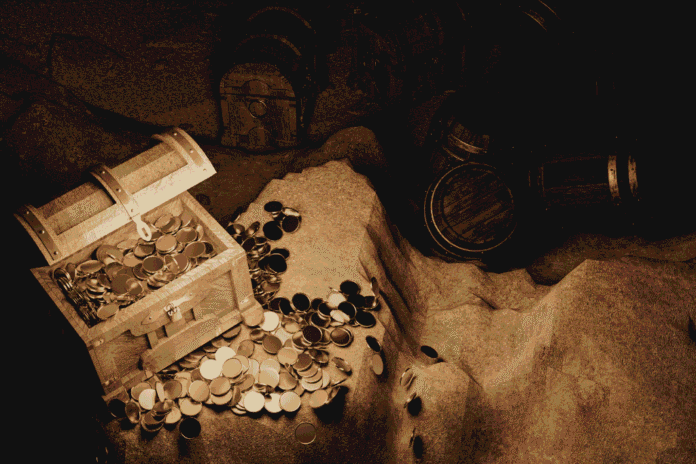
The idea of discovering treasure has always captured human imagination.
From stories of buried gold and lost cities to modern headlines about oil reserves, rare minerals, or even hidden archaeological sites, discovery carries a sense of excitement, possibility, and transformation. It promises prosperity, development, and sometimes even national pride.
But behind every discovery lies a quieter, more complicated question:
Who actually benefits when new wealth is found?
Because history shows us something uncomfortable. The people closest to the treasure are not always the ones who gain the most from it.
The Romance of Discovery vs the Reality of Control
When we think of treasure, we often imagine adventure. Explorers uncovering ancient riches. Remote regions suddenly becoming important. Small communities stepping into prosperity.
Reality tends to follow a different script.
Discovery is only the beginning. What comes next is a process shaped by power, infrastructure, policy, and access. The ability to control, extract, process, and distribute that wealth often matters far more than the discovery itself.
And that control rarely lies with the discoverers.
Instead, it tends to sit with governments, corporations, or external investors who already have the systems to turn raw value into usable wealth.
Lessons From the Past: Gold, Oil, and Everything in Between
History offers countless examples of this imbalance.
During the great gold rushes of the 19th century, thousands flocked to newly discovered deposits with dreams of fortune. A few succeeded, but most did not. The real winners were often those who built infrastructure around the rush—traders, transporters, and financiers.
The same pattern repeated itself with oil.
Regions rich in oil reserves became globally significant almost overnight. Yet the wealth generated often flowed outward, benefiting multinational corporations or centralized authorities more than local populations.
Even today, countries rich in natural resources sometimes struggle with inequality, governance challenges, or economic instability. Economists often refer to this as the “resource curse”—a paradox where regions abundant in resources experience slower development than those without.
The treasure exists. The value does not always stay.
History offers clear patterns. During the California Gold Rush, most miners walked away empty-handed while merchants and cities like San Francisco built lasting wealth. In Nigeria, vast oil reserves generated billions, yet local communities in the Niger Delta continue to face economic and environmental challenges. Similar stories play out in diamond-rich Sierra Leone, lithium reserves in Bolivia, and even tourism hotspots like Bali, where global operators often capture more value than local populations. Discovery creates opportunity, but control determines who truly benefits.
Modern Treasures: Beyond Gold and Oil
In today’s world, the definition of “treasure” has evolved.
It is no longer limited to physical resources buried beneath the earth. It includes:
- Rare minerals like lithium and cobalt powering the clean energy transition
- Cultural heritage sites driving global tourism
- Data and digital assets shaping entire economies
- Biodiversity hotspots attracting conservation funding and eco-tourism
Each of these discoveries carries economic potential. Each also raises the same question:
Who controls the value chain?
Take tourism as an example.
When a remote destination gains global attention, it can transform rapidly. Infrastructure improves, visitor numbers rise, and local economies see new opportunities.
But the benefits are not always evenly distributed.
Large hotel chains, tour operators, and external investors often capture a significant share of the revenue. Meanwhile, local communities may face rising costs, environmental strain, and cultural disruption.
The destination becomes valuable. But not necessarily for everyone who calls it home.
The Invisible Middle: Where Value Is Actually Created
One of the most overlooked aspects of discovery is what happens in between.
There is a long journey between finding something valuable and realizing its economic potential. This journey includes:
- Extraction or development
- Processing and refinement
- Distribution and access
- Market positioning
- Ongoing management and sustainability
This is where value is truly created.
And this is also where power concentrates.
Those who own the systems, technology, and networks that operate in this middle layer often capture the largest share of benefits. They are not necessarily the ones who discovered the treasure. But they are the ones who know how to turn it into consistent, scalable value.
Communities at the Center Yet at the Margins
Perhaps the most striking paradox is this:
The communities closest to newly discovered wealth are often the least empowered to benefit from it.
In resource-rich regions, local populations may see limited direct gains. In tourism hotspots, traditional ways of life can be disrupted. In areas of cultural or ecological significance, preservation efforts may prioritize global interests over local needs.
This is not always due to intentional exclusion. Often, it is a result of structural gaps:
- Limited access to capital
- Lack of infrastructure
- Weak policy frameworks
- External dependency on expertise or investment
Without the ability to participate meaningfully in the value chain, proximity to treasure does not automatically translate into prosperity.
A Shift in Perspective: From Discovery to Participation
So what changes this dynamic?
Increasingly, the conversation is shifting from discovery to participation.
It is no longer enough to find value. The real question is how that value is shared, managed, and sustained.
Around the world, there are emerging examples of more balanced approaches:
- Community-led tourism models that ensure local ownership and income distribution
- Resource governance frameworks that prioritize transparency and accountability
- Partnerships that include local stakeholders in decision-making processes
- Sustainable practices that protect both economic and environmental interests
These models do not eliminate power imbalances entirely. But they begin to address them.
They recognize that long-term value is not just about extraction. It is about inclusion.
The Traveler’s Role in the Equation
For travelers, this conversation matters more than it may seem.
Every travel decision—where to stay, what tours to take, how to spend—shapes the flow of value within a destination.
Choosing locally owned accommodations, supporting small businesses, and engaging with community-driven experiences can shift who benefits from tourism.
It may not change global systems overnight. But it does influence the micro-economies that define everyday life in these places.
Travel, in this sense, becomes more than exploration. It becomes participation.
Rethinking What It Means to “Win”
The idea of winning from a discovery is often framed in terms of profit.
But that definition is evolving.
True value today is increasingly measured by:
- Sustainability over short-term gain
- Shared prosperity over concentrated wealth
- Cultural preservation alongside economic growth
- Long-term resilience rather than rapid extraction
In this context, the real winners are not just those who control the treasure.
They are those who build systems that allow value to be created, distributed, and sustained over time.
Closing Thought
Every discovery carries a story.
Not just of what was found, but of what followed.
Of who gained access, who built systems, who made decisions, and who was left out.
Treasure, in its many forms, continues to shape our world. But it is not discovery alone that determines its impact.
It is the structures around it.
And until those structures evolve, the pattern will likely remain the same:
New treasures will be found.
Old power will decide who truly wins.
Have got stories to share? Write for us and have it published to a wider audience!

